BUT I DRINK CHAMPAGNE NOW
Rangi Gallery 23 January 2026 - 28 February 2026During his time at Rangi Nyumbani Residency (RNR), Jan van Esch explored the meanings that textiles carry.
The artist collected abandoned clothing from Amsterdam, Berlin, Lusaka, Harare, and Dar es Salaam, observing
how recurring language, logos, images, and icons create the illusion of a global conversation. For Jan, the
messages on clothing are less dialogue than monologues, speaking to no one in particular but the marketplace,
while projecting Western cultural soft power. Initially designed and sewn as garments that dress the
body, these items become commodities and carriers of individual and collective identity, before ultimately
turning into waste that bears traces of their former functions. By scavenging clothes from streets and beaches
and digging through mitumba bundles, he assembled a collection that tells a story of textile waste.
This assembly forms the basis of Jan’s commentary on textiles as a communicative system, rooted in his interest
in language and non-verbal expression. Developed through Rangi Nyumbani Residency, a collaboration
between Rangi Gallery and Alliance Française, the project unfolded across two interconnected exhibitions,
YOUWERE MY CUP OF TEA at Alliance Française and BUT I DRINK CHAMPAGNE NOW at Rangi Gallery. The
complementary titles reflect Jan’s research into how meaning is carried through words, symbols, and tone,
and how language shifts across cultural contexts. Drawing from traditions of East African textile communication,
such as kangas bearing Swahili proverbs, and placing them in conversation with Western, corporate,
advertisement-driven messaging, the artist examined how clothing communicates differently as it moves
between places, markets, and moments in his practice.
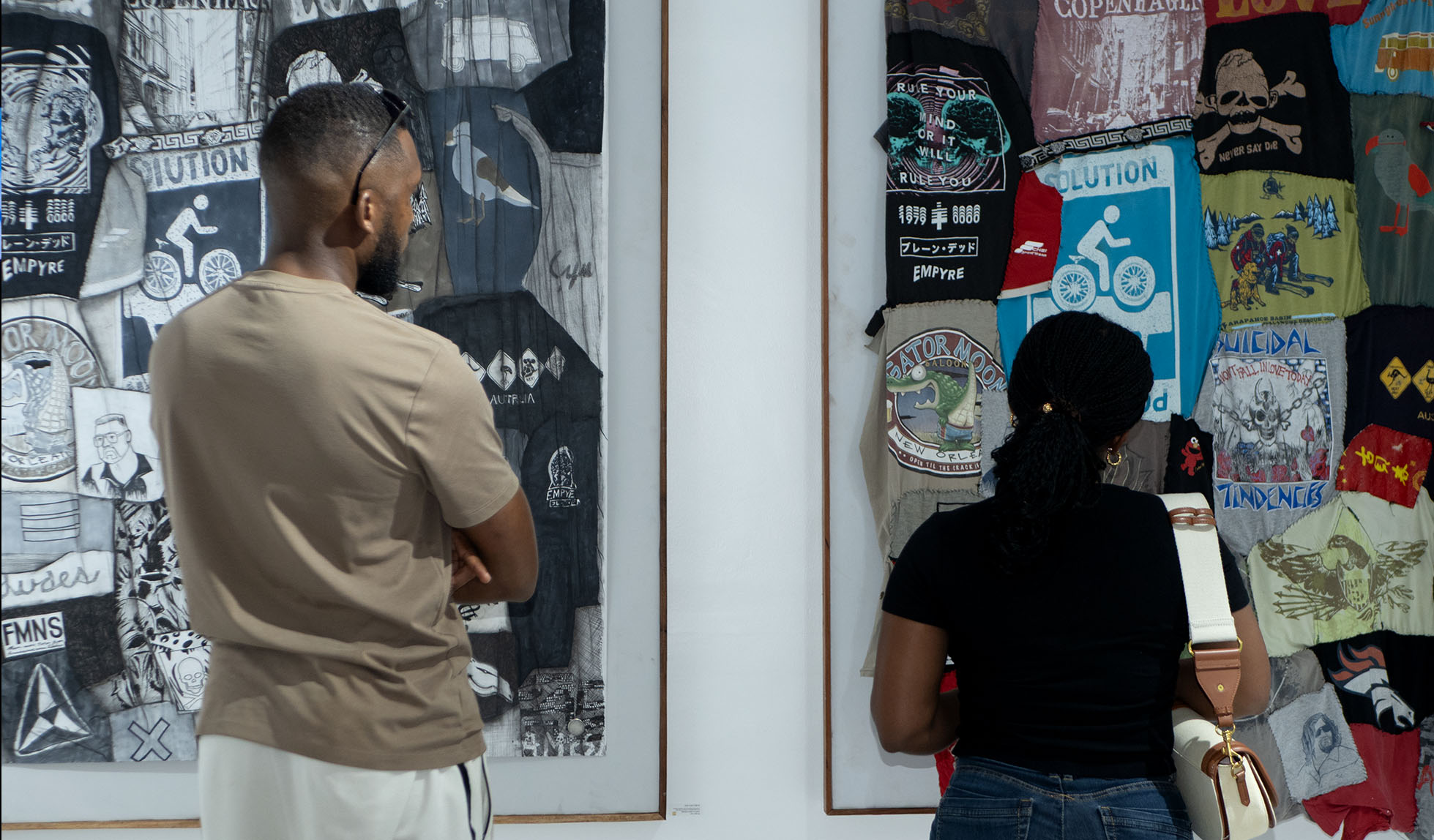
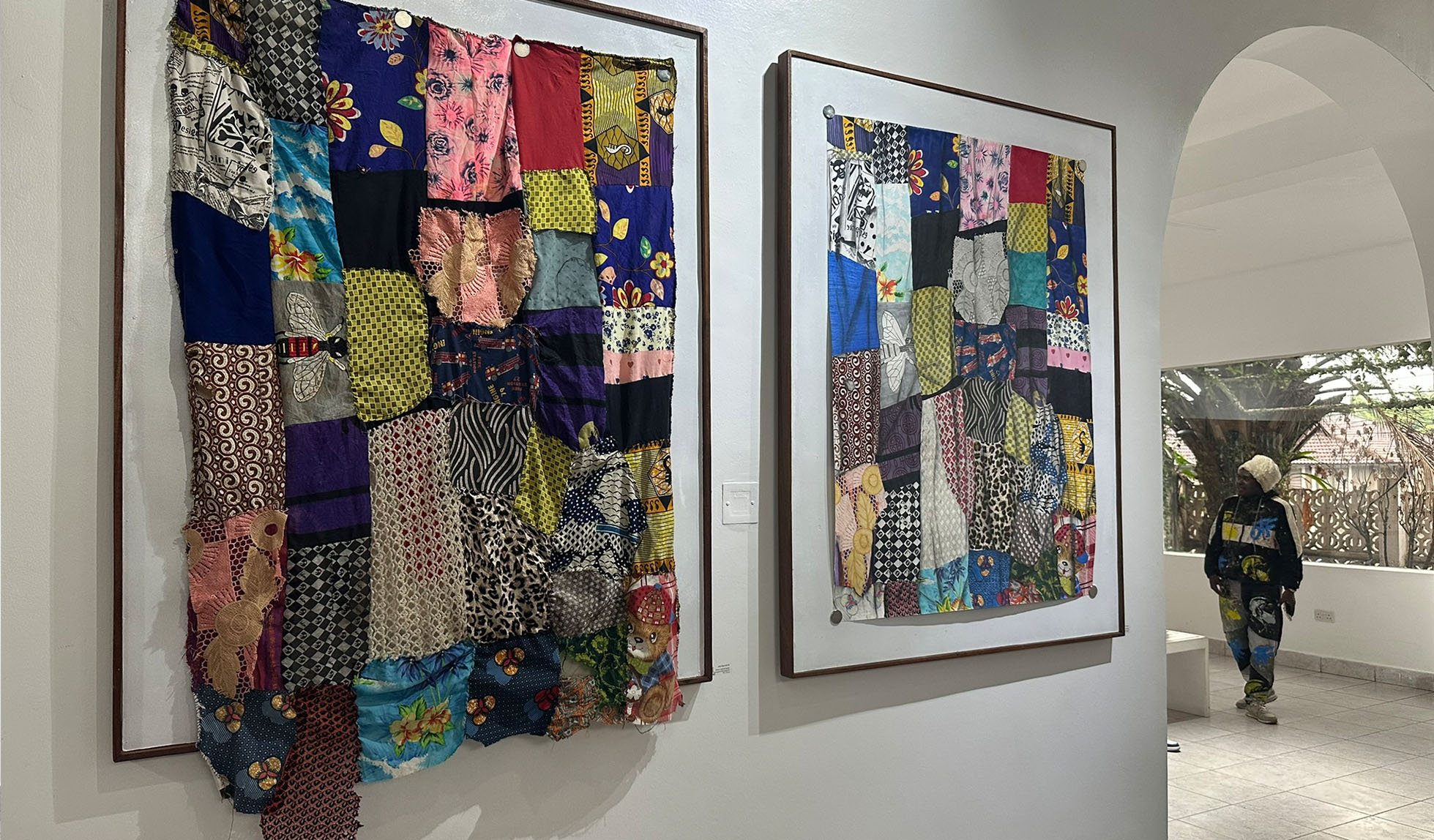
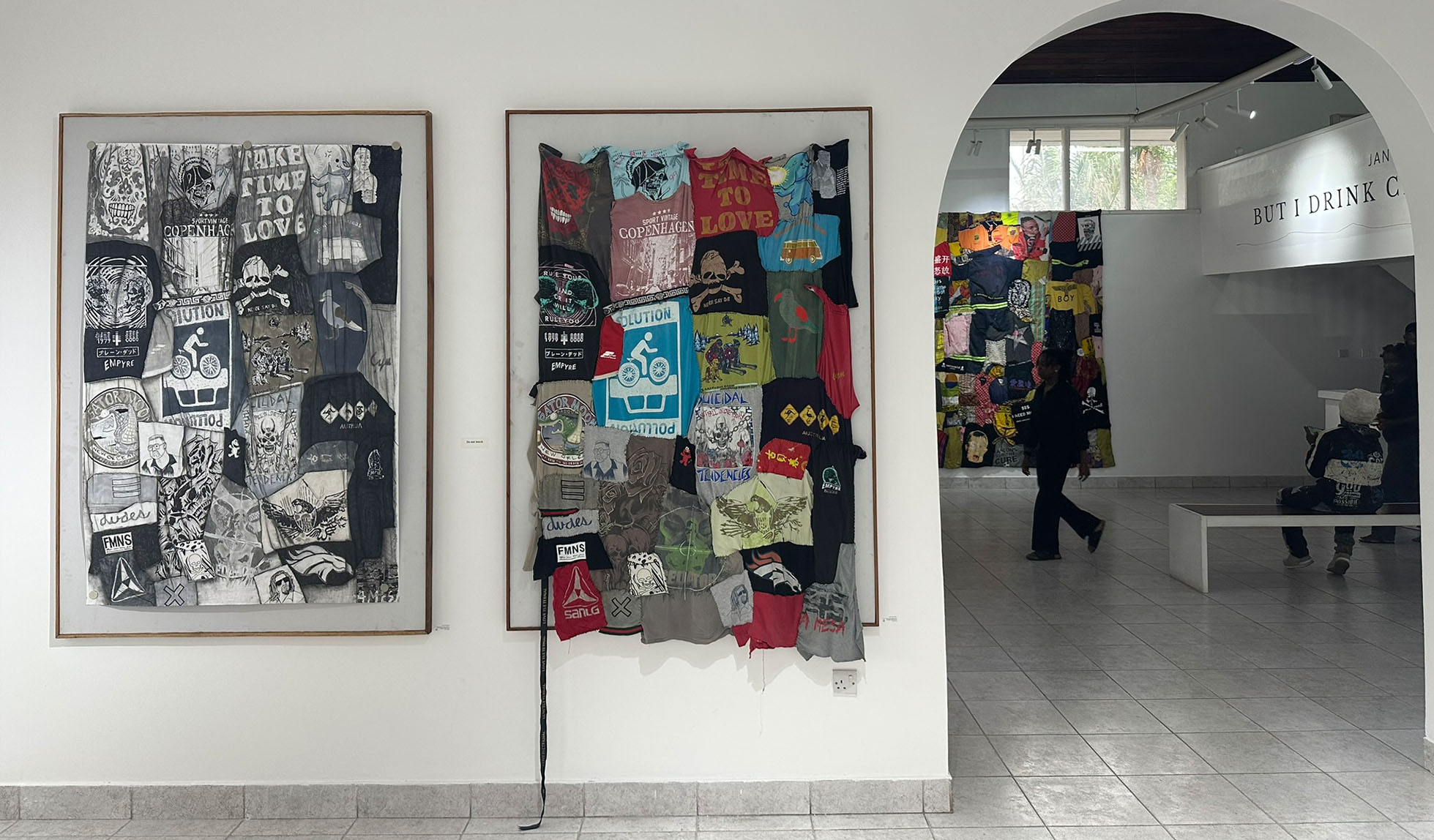
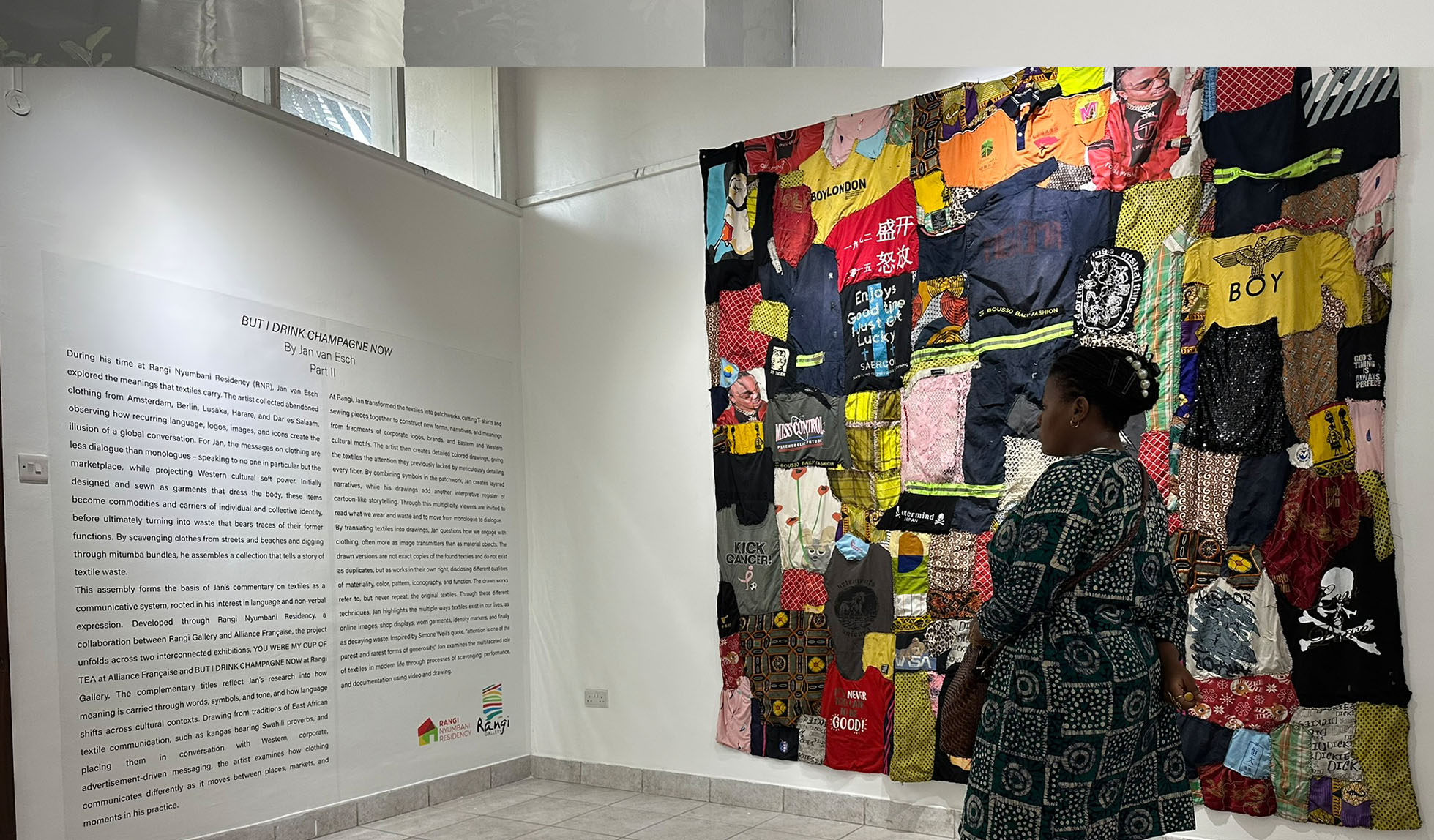
At Rangi, Jan transformed the textiles into patchworks, cutting T-shirts and sewing pieces together to construct
new forms, narratives, and meanings from fragments of corporate logos, brands, and Eastern and
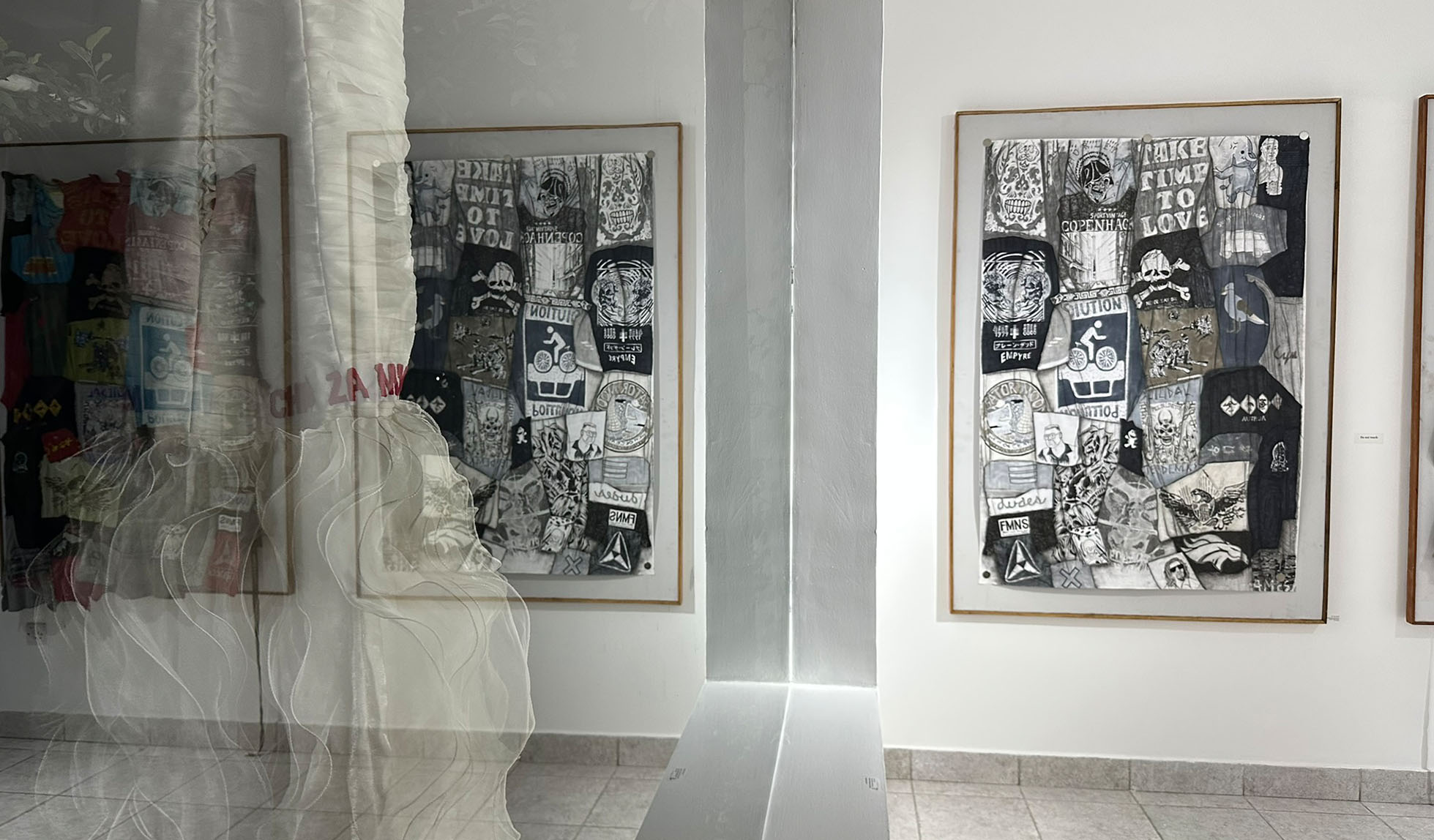
Western cultural motifs. The artist then creates detailed colored drawings, giving the textiles the attention
they previously lacked by meticulously detailing every fiber. By combining symbols in the patchwork, Jan
created layered narratives, while his drawings add another interpretive register of cartoon-like storytelling.
Through this multiplicity, viewers are invited to read what we wear and waste and to move from monologue
to dialogue.
By translating textiles into drawings, Jan questions how we engage with clothing, often more as image transmitters
than as material objects. The drawn versions are not exact copies of the found textiles and do not
exist as duplicates, but as works in their own right, disclosing different qualities of materiality, color, pattern,
iconography, and function. The drawn works refer to, but never repeat, the original textiles. Through these different
techniques, Jan highlights the multiple ways textiles exist in our lives, as online images, shop displays,
worn garments, identity markers, and finally as decaying waste. Inspired by Simone Weil’s quote, “attention
is one of the purest and rarest forms of generosity,” Jan examines the multifaceted role of textiles in modern
life through processes of scavenging, performance, and documentation using video and drawing.